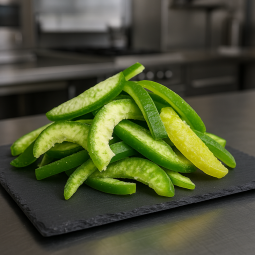
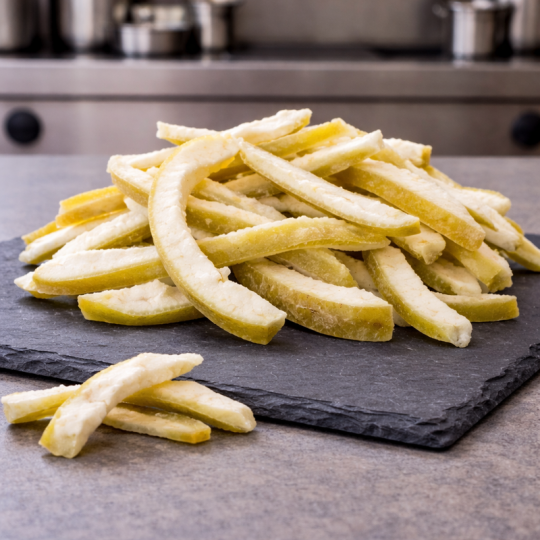
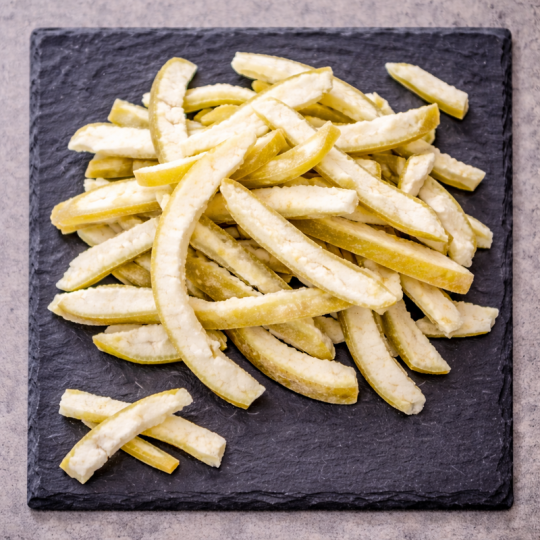
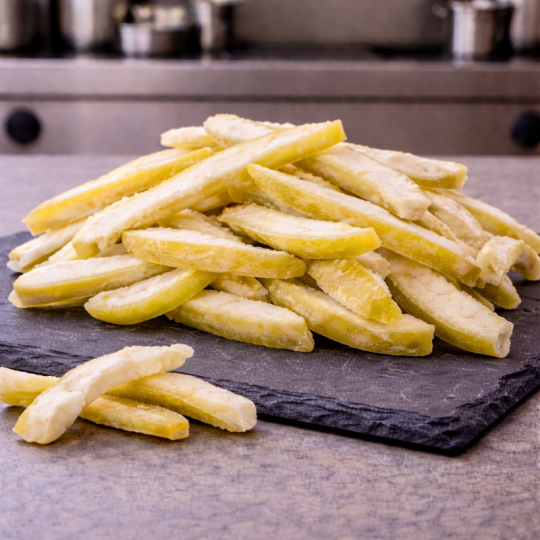
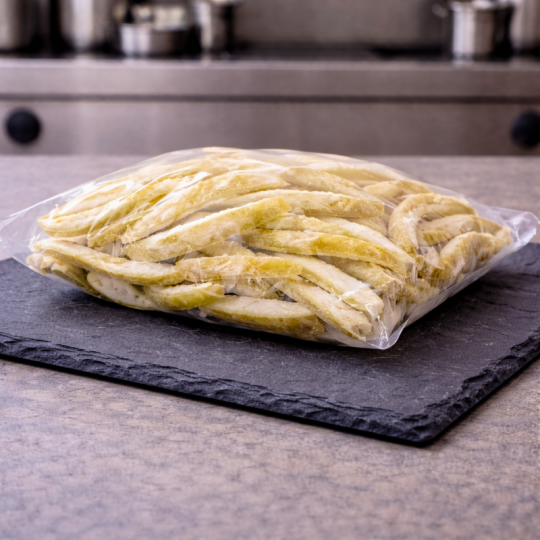


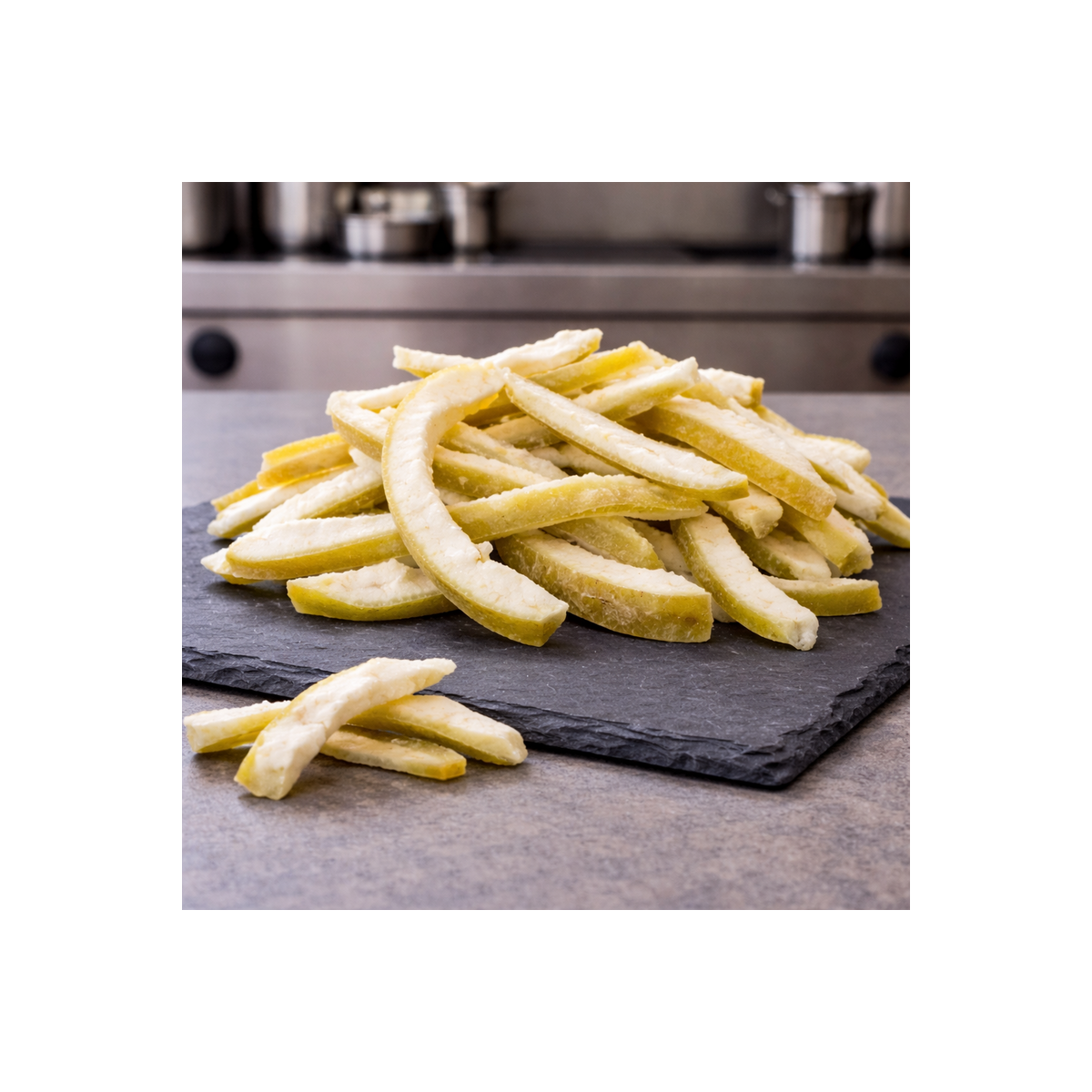
🍊 Dehydrated pomelo with a soft texture and delicately tangy flavour. An original dehydrated fruit, perfect for savoury cooking, baking, or enjoyed as a snack.
Dehydrated pomelo is a dehydrated fruit with a distinctive aromatic profile, appreciated for its natural freshness and subtle bitterness. The dehydration process concentrates flavours while preserving the identity of the fruit.
Originally from Southeast Asia, pomelo (Citrus maxima) is one of the oldest cultivated citrus fruits. Dehydration offers a practical and versatile way to enjoy pomelo in a different form.
During dehydration, approximately 90% of the water naturally present in fresh pomelo is removed. This gradual process intensifies aromas without altering the fruit’s nature.
Dehydrated pomelo is characterised by a soft texture, flexible and pleasant to chew. It remains easy to eat and delivers a long-lasting aromatic finish.
Highly valued in the kitchen, dehydrated pomelo works particularly well in savoury cooking. It pairs beautifully with roasted vegetables, sweet-and-savoury recipes, or dishes such as oven-roasted endive salads.
In baking, dehydrated pomelo brings a refined fruity note with a subtle bitterness that balances sweet preparations. It can be incorporated into desserts, pastries, or homemade recipes.
For informational purposes only, pomelo naturally contains carbohydrates and various micronutrients. Official nutritional data are available from recognised institutional sources, without any health claims.
Learn more about fruit dehydration
Reference nutritional data – CIQUAL (ANSES)
| Texture | Soft |
| Flavour profile | Lightly tangy, subtly bitter |
| Uses | Savoury cooking, baking, snacking |
| Category | Dehydrated fruit |
Vacuum-packed to preserve quality until opening.
It offers a fresh fruity taste with a subtle, well-balanced bitterness.
Yes, it pairs very well with savoury dishes, including roasted vegetables and sweet-and-savoury recipes.
No, dehydrated pomelo has a soft, flexible texture.
Pomelo originates from Southeast Asia, where it has been cultivated for centuries.
🍊 Dehydrated pomelo with a soft texture and delicately tangy flavour. An original dehydrated fruit, perfect for savoury cooking, baking, or enjoyed as a snack.