What are dried fruits?
Dried fruits refer to a category of fruits with a naturally low water content or fruits that have been dried using traditional methods. This definition of dried fruits helps clarify their place in food culture and everyday use.
This page provides a clear dried fruits explanation to help readers understand dried fruits, their characteristics and their role in everyday food habits.
The dried fruits definition is essential to avoid confusion with other fruit categories and to better understand dried fruits and their specific uses.
What is a dried fruit?
The definition of a dried fruit is based on its low moisture content, either naturally or obtained through drying. This process allows longer preservation and a concentration of flavours.
There are two main families of dried fruits:
- Oil-rich dried fruits: almonds, walnuts, hazelnuts, pistachios, cashews, pecans.
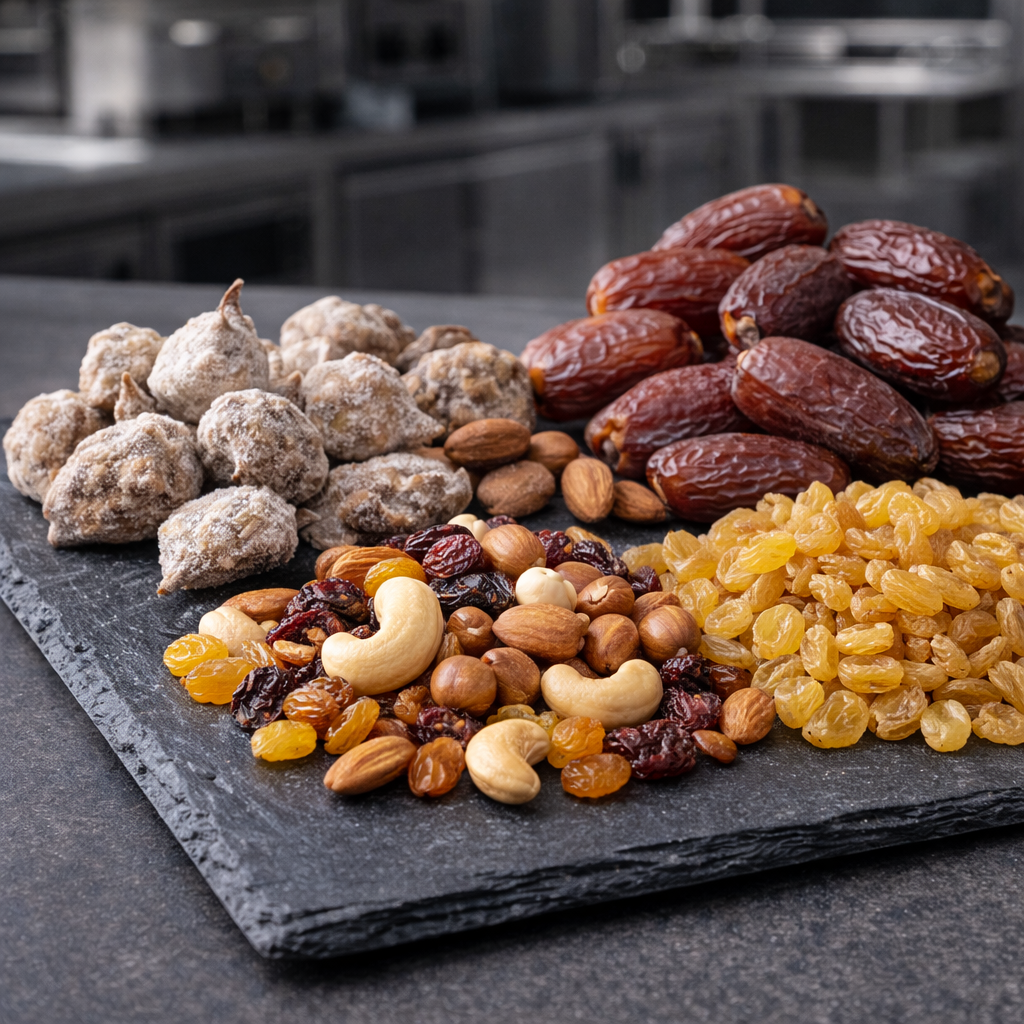
- Non oil-rich dried fruits: raisins, dried figs, dates, prunes.
👉 To explore this family further, you can also visit our dried fruits category.
Dried fruits vs dehydrated fruits: what is the difference?
Understanding dried fruits requires a clear explanation and a distinction from dehydrated fruits. The difference dried fruits present compared to dehydrated fruits mainly lies in the processing method.
Are dried fruits and dehydrated fruits the same?
No. Dried fruits are naturally dry or traditionally dried, while dehydrated fruits undergo a controlled process designed to remove around 90% of the water from fresh fruit.
Dried fruits
Dried fruits, especially oil-rich varieties, are naturally low in water. They are characterised by a firm or crunchy texture and a high energy density.
Dehydrated fruits
Dehydrated fruits usually retain a softer texture and an appearance close to the fresh fruit. They are commonly consumed as snacks or used in cooking.
👉 For a detailed explanation, visit our page dedicated to fruit dehydration.
Dried fruits nutrition: focus on almonds
Dried fruits nutrition varies depending on the type of fruit. Oil-rich dried fruits, such as almonds, naturally contain significant amounts of macronutrients.
| Average values per 100 g | Almonds |
|---|---|
| Energy | ≈ 575 kcal |
| Protein | ≈ 21 g |
| Fat | ≈ 49 g |
| Carbohydrates | ≈ 22 g |
| Fibre | ≈ 12 g |
This nutritional information is provided for reference only. For official data, you can consult institutional databases such as USDA FoodData Central.
Understanding dried fruits in everyday use
Understanding dried fruits, their definition, nutrition and differences from other fruit categories helps make informed choices. This explanation supports their use in cooking, snacking and everyday food habits.
Frequently asked questions about dried fruits
What is the definition of dried fruits?
Dried fruits are fruits with low water content, either naturally or after traditional drying, including oil-rich dried fruits and certain dried fruits such as raisins or figs.
What is the difference between dried fruits and dehydrated fruits?
The difference dried fruits show compared to dehydrated fruits lies in the drying process. Dried fruits are naturally dry or traditionally dried, while dehydrated fruits undergo a controlled dehydration process.
Are dried fruits suitable for active lifestyles?
Dried fruits are often included in active or sports-oriented diets due to their energy density and practicality, as part of a balanced diet.
How long can dried fruits be stored?
When properly stored in airtight containers, dried fruits can generally be kept for several months, and sometimes up to one year.