
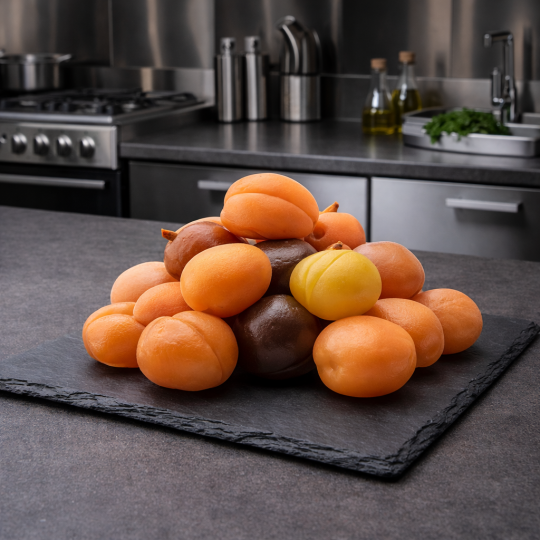
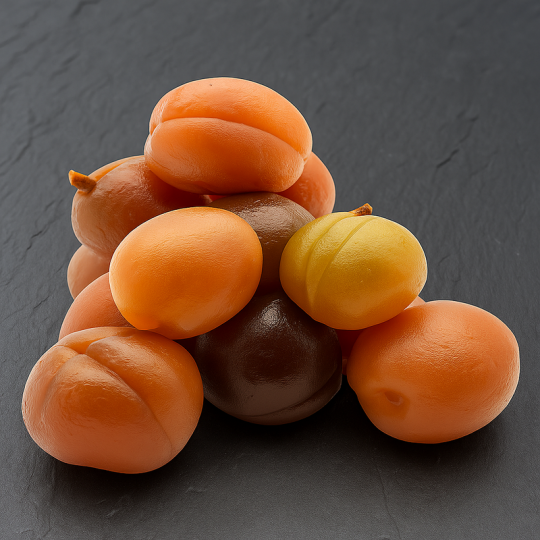
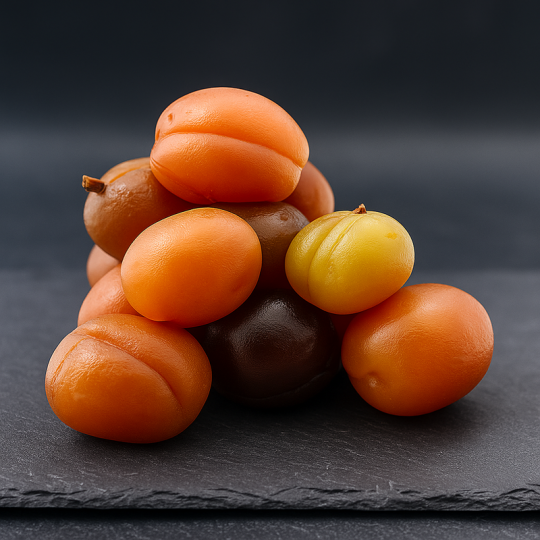


🍑 Candied apricots stand out for their generous size and authentic character. Presented whole with the pit still inside, they retain the fruit’s natural structure and an excellent hold after candying. Their soft texture, warm colour and intense aroma make them a distinctive candied fruit, highly valued in pastry and decorative uses.
| ✨ Specificity | Whole candied apricot with pit |
| 🍰 Uses | Pastry, desserts, gourmet decoration |
| 📦 Packaging | Vacuum-packed for optimal hygiene and preservation |
Candied apricots hold a special place among candied fruits. Their generous shape, warm colour and naturally soft flesh give them a strong visual presence and a distinctive identity.
Offering these apricots with the pit still inside is a deliberate choice. It reflects a respectful candying process that preserves the fruit’s structure, firmness and authenticity. This detail is particularly appreciated in traditional pastry.
Unlike dehydrated fruits , candied fruits are produced through a slow candying process. The fruit’s natural water is gradually replaced with sugar syrup, allowing candied apricots to retain their softness and aromatic intensity.
| ✔ | Whole fruit, candied with pit intact |
| ✔ | Soft, even and stable texture |
| ✔ | Distinct apricot aroma preserved after candying |
| ✔ | Natural appearance appreciated for decoration |
Candied apricots offer great versatility. Their texture allows for clean slicing or whole-fruit use, depending on the desired presentation.
They are perfectly suited to traditional recipes, but also to more contemporary creations, where their volume and colour bring depth and visual impact.
| 🍰 | Fruit cakes, pastries and brioches |
| 🎨 | Pastry decoration and gourmet finishes |
| 🥧 | Tarts and festive desserts |
| 🍑 | Combinations with cherries, angelica or candied citrus |
For culinary inspiration and recipe ideas:
Candying is a traditional preservation method that enhances fruit without altering its nature. Thanks to its fleshy and aromatic pulp, apricot is particularly well suited to this process.
Keeping the pit inside helps maintain the fruit’s structure during candying, which explains the excellent firmness of candied apricots when used in pastry.
To learn more about candied fruits and their preparation:
👉 Candied fruits: origins and methods
For general botanical information: Apricot – botanical reference .
Candied apricots are vacuum-packed to ensure optimal hygiene and reliable preservation during transport.
Shelf life: up to 12 months. For best results, store in the fruit and vegetable drawer of the refrigerator.
After opening, keep in an airtight container.
| 🍑 | Respect for the fruit Candied fruits selected for their structure and authenticity. |
| 🧼 | Quality & hygiene Vacuum packaging to preserve quality and food safety. |
| 📦 | Careful shipping Protective packaging suited to premium, delicate products. |
Keeping the pit helps preserve the fruit’s structure during candying and ensures better firmness when used in pastry.
Yes, the pit can be easily removed depending on the intended use, especially for slicing or recipe integration.
Yes, their generous size, warm colour and natural appearance make them ideal for gourmet decoration.
They should be kept in an airtight container, ideally refrigerated, to preserve texture and aroma.
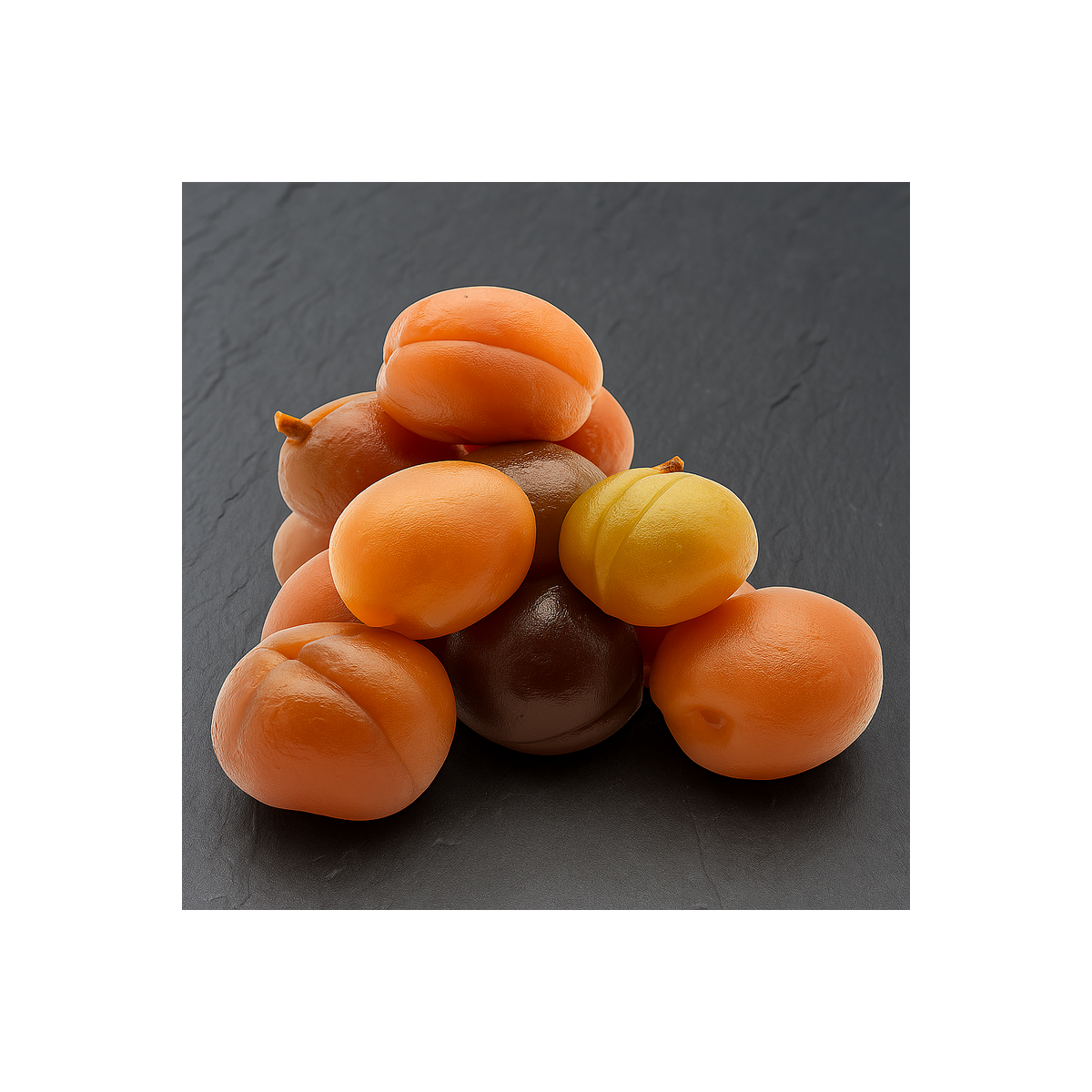
🍑 Candied apricots stand out for their generous size and authentic character. Presented whole with the pit still inside, they retain the fruit’s natural structure and an excellent hold after candying. Their soft texture, warm colour and intense aroma make them a distinctive candied fruit, highly valued in pastry and decorative uses.
| ✨ Specificity | Whole candied apricot with pit |
| 🍰 Uses | Pastry, desserts, gourmet decoration |
| 📦 Packaging | Vacuum-packed for optimal hygiene and preservation |