
Complete guide to making candied fruits – Traditional method step by step
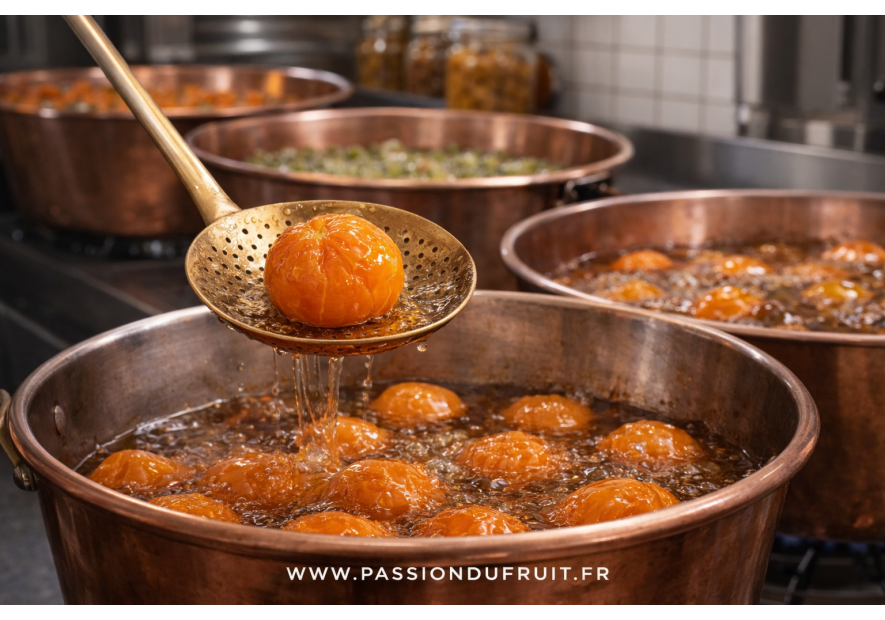
Candied fruits are fruits preserved in sugar through a traditional process based on osmosis ?. The natural water contained in the fruit is gradually replaced by increasingly concentrated sugar syrup, allowing long preservation while developing a supple texture and intense flavours.
This ancestral technique, used for centuries in confectionery and pastry making, requires time, precision and careful control of temperatures and sugar concentrations. It can be applied to many fruits such as citrus fruits, cherries, apricots, figs, melon or ginger.
If you wish to discover ready-to-use candied fruits prepared according to these traditional principles, you can explore our selection of candied fruits, designed for lovers of authentic flavours.
Frequently asked question: how are candied fruits made?
Candied fruits are made through successive baths in sugar syrup with increasing concentration, allowing the fruit to be preserved while gradually transforming its texture and taste.
Required ingredients
- Fresh fruits: 1 kg (citrus fruits, cherries, apricots, figs, melon, ginger)
- White sugar: 1.5 to 2 kg depending on the fruit and desired concentration
- Water: 1.5 L for syrup preparation
- Glucose (optional): 200 g to prevent crystallisation
Required equipment
- Large saucepan or preserving pan
- Sugar thermometer
- Skimmer
- Fine strainer
- Drying rack
- Baking paper
- Sterilised storage jars
Candied fruit making process
Fruit preparation (Day 1)
- Selection: choose ripe but firm fruits, without bruises
- Cleaning: wash thoroughly with clean water
- Preparation:
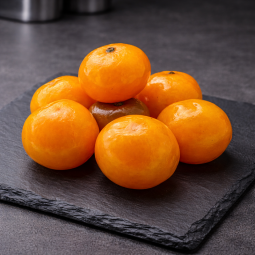
- Citrus fruits: cut into quarters or 3–5 mm slices
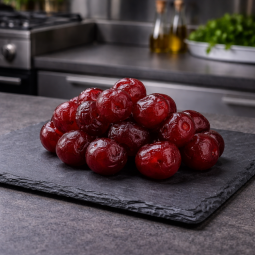
- Cherries: remove stems (keep the stem if desired)
- Apricots: cut in half and remove the pit
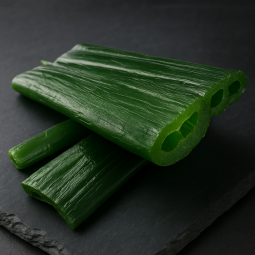
- Melon: remove seeds and cut into sticks
- Blanching (optional): 2 to 3 minutes in boiling water to soften the peel
First sugar bath (Day 1 to 2)
- Prepare a syrup at 30°Brix (300 g of sugar per litre of water)
- Bring to a boil, then let cool to 60°C
- Immerse the fruits in the warm syrup
- Let macerate for 24 hours at room temperature
Progressive concentration (Days 3 to 8)
The syrup concentration increases progressively each day, with syrup replacement and approximately 24 hours of maceration at each stage:
- Day 3: 40°Brix
- Day 4: 50°Brix
- Day 5: 60°Brix
- Day 6: 65°Brix
- Day 7: 70°Brix
- Day 8: 72–75°Brix (final bath)
Important: never heat the syrup above 80°C in order to preserve the fruit texture.
Final bath and resting (Days 9 to 10)
- Prepare the final syrup at 72–75°Brix
- Add glucose (approximately 10% of the sugar weight)
- Gently heat to 70°C for 10 minutes
- Allow to cool completely
- Let macerate for at least 48 hours
Draining (Day 11)
- Carefully remove the fruits from the syrup
- Place them on a rack
- Let drain for 24 hours in a dry, well-ventilated place
Drying (Days 12 to 14)
- Natural drying: 3 to 5 days in open air, protected from dust
- Oven drying (quick option): 50 to 60°C for 6 to 8 hours
- The fruit should be supple, glossy and non-sticky
Finishing (optional)
- Glazing: quick immersion in syrup at 80°C, then drying
- Sugared finish: roll in granulated sugar immediately after glazing
Temperature guidelines
- Blanching: 100°C (2 to 3 minutes)
- Maceration syrup: 60 to 70°C (about 10 minutes per bath)
- Final bath: 70°C (10 minutes)
- Oven drying: 50 to 60°C (6 to 8 hours)
Preserving candied fruits
- Shelf life: 6 to 12 months
- Packaging: airtight jars, baking paper between layers
- Storage: cool place (15–18°C), dry, away from light
- Relative humidity: < 60%
Tips and advice
- Avoid crystallisation: add glucose or lemon juice
- Texture: do not rush syrup concentration
- Colour: add a pinch of bicarbonate when blanching citrus fruits
- Flavour: add a vanilla pod to the final syrup
Troubleshooting (common issues)
- Fruit too soft: concentration too fast → slow down the process, lower Brix levels
- Sugar crystallisation: too much sucrose → add glucose or fructose
- Mould: residual moisture → dry longer, improve storage
- Dull colour: oxidation → blanch longer, add citric acid
Go further in the kitchen
Candied fruits are widely used in traditional pastry and confectionery. To discover usage ideas and gourmet inspiration, explore our candied fruit recipes.
FAQ – Making candied fruits
What exactly is a candied fruit?
A candied fruit is a fruit preserved in sugar through an osmosis process. The natural water contained in the fruit is gradually replaced by increasingly concentrated sugar syrup, allowing long preservation while changing the fruit’s texture and flavour.
How long does it take to make candied fruits?
The traditional method for making candied fruits usually takes between 10 and 14 days. This time is essential to allow a gradual increase in sugar concentration without altering the fruit structure.
Why must the sugar concentration be increased gradually?
A gradual increase prevents osmotic shock. If the syrup becomes too concentrated too quickly, the fruit may become too soft, lose its shape or deteriorate.
What does the Brix degree (°Brix) mean?
The Brix degree measures sugar concentration. 1°Brix corresponds to 1 gram of sugar per 100 grams of solution. In confectionery, it allows precise control of each processing step.
Why is glucose sometimes added?
Glucose helps prevent sugar crystallisation. It stabilises the syrup at high concentrations and contributes to a more even fruit texture.
What temperature should not be exceeded?
It is recommended never to heat the syrup above 80°C, as higher temperatures may damage the fruit structure.
How can you tell if a candied fruit is successful?
A successful candied fruit is supple, glossy and non-sticky. It retains its shape and colour and develops an intense flavour.
Why does candied fruit sometimes become too soft?
This usually results from a too rapid increase in Brix level or excessive temperature. The process should then be slowed down.
How can sugar crystallisation be avoided?
By adding glucose or a small amount of lemon juice and respecting gradual concentration.
How long can candied fruits be stored?
Candied fruits can generally be stored for 6 to 12 months in airtight containers, in a cool and dry place.
Why can mould appear?
Mould usually appears due to residual moisture. Insufficient drying or unsuitable storage conditions are the main causes.
Can the process be accelerated?
Only the drying phase can be slightly accelerated. The candying process itself should not be shortened without affecting quality.

Leave a comment